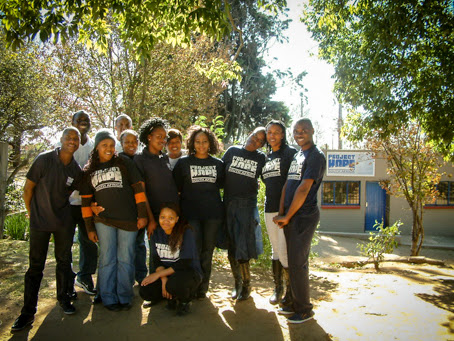
Our Clinic Staff

On Average, we see about 40 patients a day in our clinc at Zandspruit.

The Clinic

Patients can schedule appointments to limit their waiting time.

Educating Patients

Calsses are held daily to assist our patients in achieving healthier lifestyles.

Our Community Garden

Ladies within the community tend to our gardens. The produce is sold to local businesses.

Showing posts with label Zandspruit. Show all posts

Nurses takes to the streets on World Diabetes Day!


3,5 million people in South Africa are suffering from diabetes. However, this number is in reality much higher since it’s estimated that more then 50% of people are unaware they have the illness and have never been diagnosed. This is one of the major tasks that the HOPE Centre is tackling on a daily basis. To this end, on World Diabetes Day (14th November), the nurses will take to the streets in the fight against diabetes!

Diabetes – One of the most dangerous illnesses in South Africa

Around 60 people die every day from Diabetes in South Africa. This is according to Statistics South Africa. South Africa does not even feature in the list of top ten countries for Diabetes prevalence, yet the rate of people dying because of the illness on the continent is far higher than in the countries with higher prevalance. Many deaths and complications could be avoided if people went for screening and if people sought health care earlier. South Africa's high death rate is caused by lack of access to insulin and to medical professionals that are specialised in treating Diabetes. But also, numbers would come right down if people had a higher level of awareness and practiced healthier lifestyles
.

Project HOPE never stops screening
On Saturday the 14th of November the HOPE Centre staff along with Empilweni Nursing College, community leaders, volunteers from local organisations and Right to Care (an HIV Counseling & Testing Organization) will take to the streets once again to promote public awareness of diabetes and hypertension, educate patients, perform demonstrations and encourage all residents to test, prevent and manage this life-threatening illness.

Hard to recognise - serious complications
The majority of people in South Africa have type 2 diabetes, however many of these cases go undiagnosed as there are very few symptoms initially. Symptoms for diabetes include fatigue, excessive thirst and urination, slow wound healing and skin infections, blurred vision and regular bouts of thrush. As these symptoms can be very mild and develop gradually, many people fail to recognise them as warning signs of diabetes.

Diabetes complications are serious and include heart disease, stroke, blindness, amputations and kidney failure. In most cases these complications could have been avoided entirely by early diagnosis and proper treatment.

Related links:
International Diabetes Federation

Connecting Hearts


In October 2014, Project HOPE South Africa partnered with Eli Lilly and Company to bring a wonderful group of 10 volunteers to Zandspruit through the Connecting Hearts Abroad program. The volunteers brought both passion and expertise to projects in support of the work of the Lilly NCD partnership with Project HOPE in Zandspruit.  This was Project HOPE South Africa’s second year of involvement in the Connecting Hearts Abroad program and was the best yet!

Volunteer projects focused on nutrition and exercise for NCD patients, health promotion events in the community, training for community health workers, and initiating improvements to M&E systems for the NCD project.

Through the program this year, the Lilly volunteers successfully made a lasting impact on the NCD partnership in Zandspruit. We sincerely appreciate both the opportunity to participate as a Connecting Hearts Abroad program partner and the individual efforts of each of the outstanding volunteers.

Educating Our Patients


Over the past two months, the HOPE Centre has been focusing on educating patients about diabetes and/or hypertension.


Portia Zulu and her team of Peer Educators discuss the work they've been doing.  As Health Education Manager, Portia equips the team to educate others by passing on her expertise in nutrition and health. 
Portia | Health Education Manager

Currently, the Education Team is implementing a program, 5 Steps to Self Care, that equips patients with knowledge about their health and stresses the importance of knowing their numbers. 

"The program answers questions such as: What is hypertension?  What are high numbers?  What are low numbers?  And what are the warning signs I should look out for?" Portia explains.  "It also teaches people what they should and shouldn't eat."

The 5 Steps to Self Care walks patients through basic understanding of diabetes and hypertension, nutrition, as well as exercise.  Overall, the course is 25 sessions and includes hands-on lessons like cooking demonstrations and exercise classes.   

"We haven't decided for sure, but we are thinking we'll hold Zumba classes for the exercise portion of the program," Portia says.

Another program sponsored by one of our partners, Lily, is Conversation Maps.  Intended to get patients talking and asking questions, Conversation Maps highlights common lifestyle choices and how these decisions affect diabetics.  Topics such as portion control, proper exercise, and myths surrounding diabetes are discussed.  Portia explains some of the ways that a patient's culture may affect his lifestyle choices.  For example, large family gatherings with plenty of unhealthy foods are common, and a patient may feel obligated to partake.  She also explains that providing people with accurate information about diabetes is essential.  When a patient begins feeling the negative effects of diabetes, she may visit a traditional healer instead of seeking medical attention, which can lead to ineffective treatment or no treatment at all. 
Portia shows off the program, Conversation Maps

But these programs alone are not enough.  A motivated and educated team is required to bring this valuable information to our patients.  Portia and team of three Peer Educators work to bridge that gap and to make this information applicable and easy to understand. 

Xolelwa | Peer Educator
Xolelwa teaches two classes every week -- one for the HOPE staff and one for community members.  Even though her community class is just starting up the 5 Steps to Self Care, she sees that the students are eager to learn and contribute. 


Jeff | Peer Educator
Jeff also has two classes, and is excited to report that his class of community members has an attendance of 80%.   Jeff recognizes the hard work of his students.  "One of the ladies that attends is beginning to pay attention to what she eats.  While at a big family event, she chose healthy foods," he says.

Donation | Peer Educator
Donation's two community classes are also thriving.  "They ask many questions and even want to invite friends," he says.  One of Donation's classes is held on Saturdays.  The team explains that patients will often have jobs that keep them from attending during the week.   

The members of the Education Team are diverse, come from various backgrounds, and speak different languages.   They explain that this comes in handy while teaching the classes, as English is not the first language of many of their students.

Flexible and motivated, this power team is determined to educate the HOPE patients and push them towards healthier lifestyles.


But their work doesn't stop there.  They are also to determined to practice what they preach.  Going through the 5 Steps of Self Care themselves, the team is implementing healthier choices in their own lives.

As of now, there are 90 people participating the 5 Steps to Self Care program, and the team expect numbers to continue to grow.