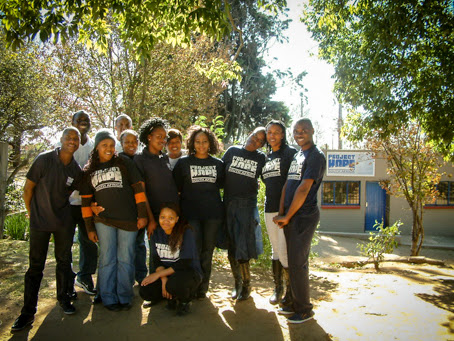
Our Clinic Staff

On Average, we see about 40 patients a day in our clinc at Zandspruit.

The Clinic

Patients can schedule appointments to limit their waiting time.

Educating Patients

Calsses are held daily to assist our patients in achieving healthier lifestyles.

Our Community Garden

Ladies within the community tend to our gardens. The produce is sold to local businesses.

When is it OK for Chronic Illness to be normal?

When is it ok for chronic illness to be normal? This is something that I have been pondering for the last few days, but it first came up when I used to live in Mozambique. There are certain chronic illnesses which unfortunately result in people suffering pain and other disabilities with very little that can be done. However, there are other conditions where this does not have to be the case.

When I lived in Mozambique, I stayed in a Malaria endemic area, and over the course of a couple of years suffered from multiple bouts of the disease. The first time I got it I remember the crippling headache, fever, lethargy like an extreme case of the flu. After I had taken my medication for about a week I felt much better and continued on with life as normal. Yet I clearly remember the subsequent bouts of malaria were often not as crippling - yes there was a fever and a headache, but because of work and other commitments I often couldn't take time off and I would soldier on through. Then it began to hit me. What if everyone was feeling like this? What if the many people who had malaria, had a constant headache, felt tired, but because of pressures to just survive,  pushed on through without taking time off to go to a clinic and queue for a test and rest at home. Would this feeling over time become the new "normal" forgetting what it was like to live pre-malaria?
Fast forward almost 9 years and I am sitting in Zandspruit, South Africa wondering exactly the same thing. We are screening people of diabetes and hypertension. We've come across some patients with blood glucose of 37 mmol/l or 666mg/dl, another patient with 27 mmol/l or 486 mg/dl. Many patients had blood pressure of over 160/100 mmHg. In fact over 35% of patients have had an abnormally high blood sugar reading.  One of my first questions I ask these patients is, "How are you feeling?" Often the response is tired, headache, blurry vision, sweating a lot, having to use the bathroom frequently. My next question is "Are you aware that you have high blood or high blood sugar?" Some patients say yes, whilst others say no.

This one patient situation typifies most. He had a very high blood sugar and blood pressure level. He knows that he is diabetic and has high blood pressure. He used to take the tablets, but he doesn't anymore because he didn't think they worked, they ran out, and he couldn't take time off work to go to the clinic and queue all day to get another prescription.

So, when is ok for chronic illness to be normal? Have patients simply forgotten what it was like to "feel" energetic and headache free? Do people soldier on feeling like this because in their minds there is no other option, or is it because they don't know any better?

The answer is NEVER. It should not be acceptable. You and I would most likely do everything we possibly could to feel better again. But we are the lucky few, where barriers to quality healthcare are few and far between. 

 I suspect for the patients that I met in Zandspruit, the reason that chronic illness has become 'normal'  is a combination of living on the bread line trying to make end's meat, and the absurd inefficiencies, lack of care, education and other barriers that they face at government clinics that leads to a sense of hopelessness and acceptance of feeling ill.


My hope is that as we slowly break down the barriers in the community, reducing wait times at clinics, improving patient self care, reducing blood pressure and blood sugars to a manageable point, these patients will feel so much better, more productive, able to do things they haven't been able to do for years, that they will advocate for improved quality, improved access to preventative screenings like the ones we are doing.

Over the coming weeks Project HOPE in partnership with Eli Lilly, The University of Pretoria, Empilweni Nursing College, and other community stakeholders will continue to hold screening days to make people aware of these conditions, and then will be able to refer them to our HOPE Centre clinic where they will receive  proper care and attention and hopefully very quickly begin to see drastic improvements in their health.

Diabetes and Hypertension Screening Day in Zandspruit

Setting up our testing station

Project HOPE South Africa as part of the HOPE Centre project, funded through the Lilly NCD partnership held its first diabetes and hypertension screening event in Zandspruit on Saturday 16th June 2012. Despite a freezing cold day and recent service protests in the community which shut down everything, we managed to screen over 150 people and generated a lot of interest in our project in Zandspruit. 

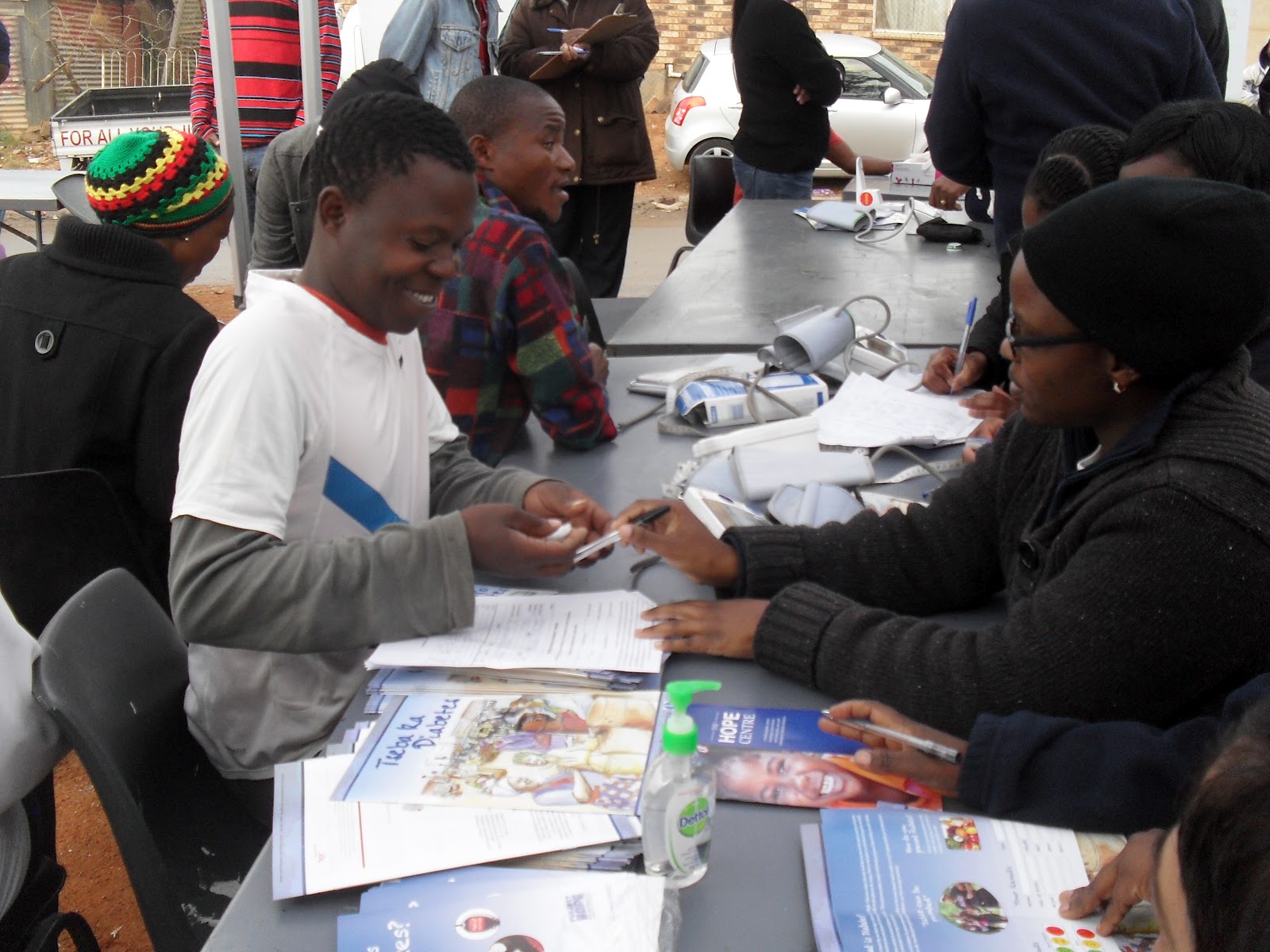
Nurses registering patients
Screening events like this one are part of our strategy to sensitize and make communities aware of the growing problem of (pre)diabetes, (pre)hypertension in these urbanising areas. In sub-Saharan Africa only 15% of people with diabetes have been diagnosed, meaning the vast majority of people are living with the disease and only presenting at the clinics when complications have set in. By offering free screening opportunities like this one, we are able to catch the diseases sooner, get people onto treatment when necessary quicker and improve patients quality of life.


Our team of volunteer nurses
We were supported by a wonderful team of 13 volunteer nurses provided to us by Empilweni Nursing College in Randburg who helped us weigh and measure patients so we could take their  BMI, prick fingers to get a random blood glucose value, take blood pressure and then provide counselling and referral services at the end. Teams of nurses from the college will be a regular part of these screening days ensuring that we can screen as many people as possible at one go

Patients queuing for the various tests
Homemed, a medical diagnostics company donated all our glucometers, strips and lancets and provided training to the nurses on how to use the glucometers.

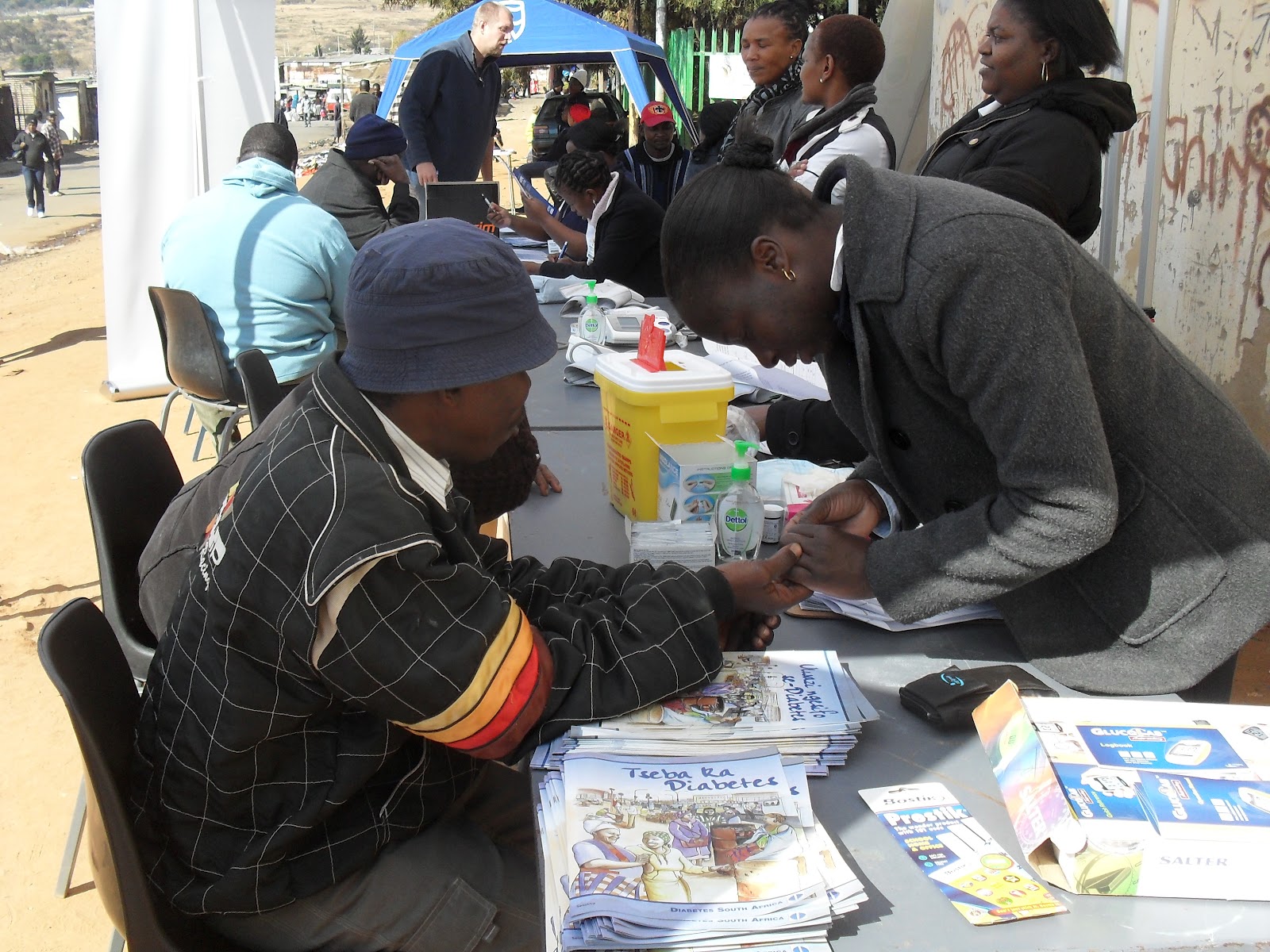
Getting a finger pricked!
All the patients that we saw, received education material about the risks of diabetes and hypertension, were educated about their results, and where necessary were referred either to the government clinic for an immediate follow up, or to Project HOPE's clinic for a re-test in 3-6 months time. This is  a really important piece of the puzzle. Many times patients receive tests, but because nursing staff are over stretched they do not have the time to sit down with the patient and explain thoroughly what the numbers mean. Project HOPE is using a very simple, yet effective stop light system approach so the patients were able to see if they were in the 'Red' or danger zone, 'Yellow' or warning zone, and 'Green' or healthy zone. 


Project HOPE will be screening in Cosmo City this Saturday the 23rd June, and then again in Zandspruit in August. Over the next couple of years we will be repeating this on an regular basis.

Check back next week for pictures of our screening event in Cosmo City!


Cosmo City Baseline Survey

Over the past four days a team of twenty community members, led by Project HOPE's Lebo Molete underwent training on how to conduct a community health knowledge survey and screen for risk factors such as blood pressure, weight, and waist circumference.

The team went through a day of training and then surveyed the community for three days. Each morning the team met and we distributed out bags full of survey forms, BP machines, scales and packed lunches! The whole family got up early each morning to make sandwiches!


It was an interesting experience, following on from our survey in Zandspruit which is a neighbouring township where the majority of people live in tin shacks. In Zandspruit there were a lot more people around during the week, as a high percentage of people who live there are unemployed. People were out on the dirt streets, talking with neighbours, wandering around but in Cosmo City the environment was quite different.

Cosmo City developed as a sort of social housing experiment where people from neighbouring townships were relocated into the area. It is designed to offer a mixture of government subsidised housing with low and medium cost traditional housing split up into various extensions, intermixed with schools, a business park and shops. The idea was to develop an economically diverse area for the emerging middle class.

While we were surveying we noticed a stark constrast in attitudes of people living in the different extensions. During the week, the traditional housing sections were virtually empty, with many people having gone to work. The people that were at home tended to be quite suspicious of us, many saying that they didnt want to be surveyed because they had medical insurance. Contrasting this was the government subsidised housing sections which were full of people due to high unemployment who were more than happy to get screened as for them with no health insurance access to medical services is a challenge.

Cosmo City unlike Zandspruit does not have a government clinic servicing its population so they have to travel either to Zandspruit or closer into Johannesburg to get primary care services. This makes it more challenging for people to get regular preventive health check ups.

Project HOPE picked Cosmo City to be part of the HOPE Centre Project because combined with Zandspruit it provides us with a nice socio-economic mix of people enabling us to see in terms of diabetes and other chronic diseases where the burden lies and if ones economic status changes a persons health behaviour.

More pictures can be found on our facebook page - click on the right hand tab to like it!

Thanks for reading!


Project HOPE attends the first Healthcare in Africa Conference


The Conference Participants

I was privileged to attend the first Healthcare in Africa summit organised by the Economist in Cape Town in March. Leaders from across the healthcare field gathered together at the Cape Town Convention Centre for two days of interesting discussions looking at the many challenges that healthcare in Africa faces today.
Minster Motsoaledi
The first day was spent discussing how Zambia and South Africa are changing the way healthcare is delivered on the continent through the development and implementation of a National Health Insurance system to help reduce inequities in the system. The highlight was listening to the Ministers of Health from Zambia Joseph Kasonde and Aaron Motsoaledi from South Africa. These policy makers were then challenged by stakeholder representatives.
Day two looked at some of the practical challenges that healthcare systems on the continent face like the role of both the public and private sectors in healthcare delivery, what the best investment in public health infrastructure is and what the role can civil society play. We had interesting presentations from the President of Save the Children, the International President of Medecins Sans Frontieres and the CEO of Discovery.
Derek Yach and Adrian Gore
Later in the day the issue of chronic diseases came up which was of particular interest to me. We talked about how to tackle the double burden of disease that is now emerging on the continent as people are living longer and diets and lifestyles are changing, using new technology where healthcare workers are few and how can we in Africa prevent these chronic diseases such as diabetes and obesity from becoming the problem that they are today in the developed world. We had an excellent presentation on this from the SVP of Global Health and Agriculture at PepsiCo, Derek Yach, and from the CEO of Discovery, Adrian Gore.

The take home message of the conference was that the need is great and that there needs to be engagement from all sectors of society if we are ever going to be able to provide a level of healthcare that we can be proud of to our citizens on the continent. Project HOPE is well placed through our work in Johannesburg and across the region to help with this great mission.

New Staff start with Project HOPE

 Project HOPE in South Africa welcomes two new staff to its senior management team to help with the HOPE Centre project:

Lebo Molete, our new Program Officer has an extensive background in social policy and health having previously worked in the UK and South Africa. He has a particular interest in non-communicable diseases and  was the founding member of a local NGO called PHELA (Public Health Education Liaison and Advocacy Project) which seeks to improve the quality of life of patients with chronic diseases through patient education and support groups.  Lebo is currently completing a Masters degree in Public Health.

Carol Diplock, our new Manager of Operations and Finance comes from having spent 15 years working for a leading UK charity called Voluntary Service Oversees (VSO) as their Office Manager having established their office in South Africa and assisting with the opening of their office in Mozambique.