“Diabetes is not such a big deal right? I mean, I know that I am a little bit overweight and maybe don’t exercise enough and drink a bit too much, but I can change that when I want too. And even if I get diabetes, I just need to lose some weight and maybe pop a pill or too, no big deal.”
 |
| Image courtesy of the Sun Newspaper |
This could be seen as a reasonably common response in Western countries such as the UK and USA where we are slowly being desensitized to our country’s expanding waist lines. Our fast paced lifestyles and ever increasing sedentary work environments mean that we have less time to exercise, cook meals and maintain a healthy lifestyle. Instead we opt for convenience.
For a lot of us we have an insurance policy just in case we do get sick – it could be the National Health Service in the UK, it could be in the form of health insurance in the US or even medicaid. If we are diagnosed with diabetes, we have access to a specialist, access to all the necessary tests, access to check up visits, access to quality education given by someone who knows what they are talking about and a constant supply of medication never needing to worry that our pharmacy may run out.
Let’s shift our focus to Africa for a moment and compare. The number of people with pre-diabetes and diabetes is estimated to grow the fastest in Africa over the next 20 years increasing by an estimated 98%. One of the main reasons we are aware of diabetes as a disease is because our governments spend incredible amounts of money on its prevention and treatment. The North America and Caribbean Region spent an estimated USD214 billion on diabetes in 2010. This represents about 57% of the total global healthcare expenditure for diabetes. In comparison, the Africa Region spent an estimated 0.4% or USD1.4 billion.
 Being aware of diabetes is the first step in preventing it. Yet in Africa many people have not even heard of the disease. People are unaware. When you are sick, you get to go and see a doctor. You may have to wait a few minutes as often doctor’s surgeries run behind on time, but if you make an appointment you are likely to see a doctor pretty quickly. That’s not the case here. There are no doctors working at the primary clinic in Zandspruit. Furthermore the clinic covers an area in which around 200,000 people live. If you are sick and want to see a nurse you spend the whole day waiting. So generally people wait until they are very sick because they cant take time off work or are scared of losing their jobs. This means that if early detection services were available diabetes in a patient could have potentially been prevented.
When a person has diabetes, they don’t get access to the same services like you would in the UK or US. In Zandspruit, they see a nurse who is only able to do very basic tests. Because her time is constrained by the volume of patients she must see, she cannot give very comprehensive education about the disease as this is time consuming. Therefore a person with diabetes is likely to have a poor understanding of the disease and therefore wont manage it well. In the UK or US, you will have your feet checked at least once a year, your eyes checked, you will have your cholesterol, you HbA1c and a plethora of other tests done to make sure that everything is ok. These tests, because they are costly are not available here.
Accessing medication is also a real issue here. Sometimes the clinics don’t have the medication that you need. If you need insulin you cannot access that at the clinic you have to travel to a hospital which costs money.
Lifestyle changes are also difficult to make here. People’s incomes are stretched to the maximum especially if they are unemployed. This means that they will purchase cheaper, unhealthier food, rather than more costly healthier options. Exercise in a township is difficult when there are no facilities.
To cut a long story short many patients with diabetes have said that they would rather have HIV because they see that as more manageable with more resources available to them. This is terrible. Complications of diabetes are costly and as they progress disable a person, thus not allowing them to work. Because of the lack of management services, patients disease can progress quicker meaning that complications can set in at an earlier stage reducing their productivity resulting in an increasing burden to an already overstretched family.
This is why Project HOPE is here in South Africa. Through the HOPE Centre project we intend to change the way diabetes is managed in the community. We will empower people with knowledge and skills so that they can prevent getting the disease, or if they have it already manage it in partnership with a qualified team who will be able to provide them with quality care and treatment options. Diabetes is a big deal. It is a real and present danger to the lives of many in South Africa and we need your help to stop it. Please would you consider helping?There are various ways you can help:
A financial gift of $100 would allow us to screen 29 patients and provide them with education on diabetes. Go to our gift catalogue link to make a donation. Raising funds for the project such as completing a sporting event such as a running race or triathlon, or holding a garage sale and sending the proceeds to the HOPE Centre project? If so, contact me on slawson@projecthope.org for more details. Volunteering for the project. We are looking for a variety of people who could donate some of their time to help us with various projects such as editing video, designing flyers, or even coming and teaching patients here in South Africa. If you are interested please contact me on slawson@projecthope.org Thanks for reading!
-Stefan
Ps If you want to check to see if YOU are at risk of developing diabetes, the American Diabetes Association has a great free lifestyle test, just click here 
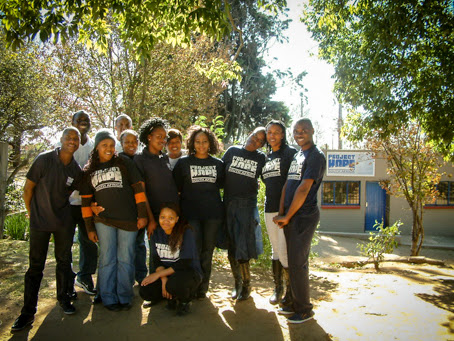


 The team went through a day of training and then surveyed the community for three days. Each morning the team met and we distributed out bags full of survey forms, BP machines, scales and packed lunches! The whole family got up early each morning to make sandwiches!

 It was an interesting experience, following on from our survey in Zandspruit which is a neighbouring township where the majority of people live in tin shacks. In Zandspruit there were a lot more people around during the week, as a high percentage of people who live there are unemployed. People were out on the dirt streets, talking with neighbours, wandering around but in Cosmo City the environment was quite different.

 While we were surveying we noticed a stark constrast in attitudes of people living in the different extensions. During the week, the traditional housing sections were virtually empty, with many people having gone to work. The people that were at home tended to be quite suspicious of us, many saying that they didnt want to be surveyed because they had medical insurance. Contrasting this was the government subsidised housing sections which were full of people due to high unemployment who were more than happy to get screened as for them with no health insurance access to medical services is a challenge.


