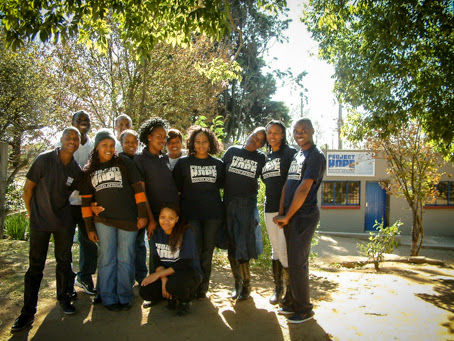
Our Clinic Staff

On Average, we see about 40 patients a day in our clinc at Zandspruit.

The Clinic

Patients can schedule appointments to limit their waiting time.

Educating Patients

Calsses are held daily to assist our patients in achieving healthier lifestyles.

Our Community Garden

Ladies within the community tend to our gardens. The produce is sold to local businesses.

World Hypertension Day, South Africa – The screening continues


HOPE Centre staff are familiar faces in Zandspruit, a large informal settlement outside of Johannesburg. Every month the HOPE Centre team takes to the streets to give a helping hand in an area where awareness for diabetes and hypertension is often low. Project HOPE screens, educates and advises residents of the community on their status and the healthy practices that can help prevent non-communicable diseases.

So for the HOPE centre, the activities of ”World Hypertension Day” are a frequent occurrence. However, Saturday the 16th of May was extra cheerful and involved screenings as well as numerous volunteers from Monash University and the local community who drew attention to the HOPE Centre staff’s activities and the burden of NCDs with a flash mob dancing in the streets!

103 residents participated in the screening for hypertension and diabetes on the ”World Hypertension Day” event that was held on Saturday 16th of May in Zandspruit. Half of those who were screened were referred to the HOPE Clinic for future check-ups due to the high rate of undiagnosed hypertension that we often find in the community.

By offering free screening opportunities like this one, Project HOPE is detecting NCDs early and getting people into appropriate treatment when necessary to improve patients’ quality of life.

We were supported by a wonderful team of 43 volunteers!
We are grateful for the help and support from the nurses of Empilweni Nursing College in Randburg who helped us weigh and measure patients so we could check their BMI, prick fingers to assess diabetes risk, take blood pressure, educate residents about their results, and where necessary refer people to the HOPE Centre clinic. All participants that came for the screening tests received education materials about the risks of diabetes and hypertension and some fruit to promote a healthy diet. Some people also just came to chat or to dance with the HOPE centre staff and volunteers!

We also want to thank the cheerful group of happy flash mob dancers from the
Red Drop organisation at Monash University who provided some light-hearted fun on the day for everyone around! 

World Hypertension Day in Zandspruit – Feeling the Pressure


A shocking number of people in South Africa, approximately 6.3 million, are living with high blood pressure. This is one of the highest rates of hypertension world-wide and provides the HOPE Centre with both a challenge and an opportunity to raise awareness and encourage community members to take measures to prevent this life-threatening disease on the upcoming World Hypertension Day, 17 May.

“Know your blood pressure” is the theme for 2015
 “Knowledge is key” as one says and raising awareness about hypertension is essential. Global statistics indicate that only 50% of those with hypertension are aware they actually have it and in some populations the percentage is even less than 10%. Widely acknowledged as an often undiagnosed condition among patients in South Africa, high rates of poorly controlled hypertension make many South Africans
susceptible to life-threatening complications like stroke and heart attack. Statistics show that about 130 heart attacks and 240 strokes occur daily in South Africa. This means that 10 people will suffer a stroke and five people will have a heart attack every hour.

Project HOPE to the screening!
On Saturday the 16th of May the HOPE Centre staff along with Monash University, Empilweni Nursing College, volunteers from local organisations and Right to Care (an HIV Counseling & Testing Organization) will take to the streets to promote public awareness of hypertension, educate patients, perform demonstrations and encourage all residents to test, prevent and manage this silent epidemic.

“We want to reach about 300 adults throughout the community of Zandpsruit on WHD, to provide them with an opportunity to know their blood pressure and to seek assistance as a preventative and health promotion measure.” – says Refilwe L. Maseko, Project HOPE program coordinator.


South Africa – Salt reducing pioneers
Salt is a key contributor to high blood pressure, as it makes the heart work harder and can lead to heart disease, stroke, heart failure and kidney disease. According to the Heart and Stroke foundation, South Africa, South Africans also consume far more than double the amount of recommended salt intake per day. Not only are the South Africans happy salters, the problem is that the majority of this salt is hidden in products and consumed by people who are probably unaware of the high salt content in their food. For example, the biggest salt traps are by far bread and margarine.
This fact has lead to ground breaking South African legislation by Minister of Health Dr Aaron Motsoaledi which will make salt reduction in the food industry mandatory.

The HOPE Centre feels strongly positive that South Africa is setting an example with the new legislation around salt reduction in foods. Still, however, education of the general public and raising awareness for the problem is crucial.

We look forward to seeing Salt Watch, working in association with World Action on Salt and Health (WASH), launch a major national awareness campaign to help reduce population salt intake in South Africa later this year. 


Related links:


Herbs make the community of Zandspruit grow


Ideas are constantly flowing and leading to new and exciting initiatives at the HOPE centre in Zandspruit. One of the newest blooming projects is to involve and educate local community members and patients from the HOPE Centre clinic about healthier cooking - through a wonderful smelling and lush herb garden!


The driving force behind this continuously growing project is Project HOPE program coordinator Refilwe L. Maseko who saw an unused space on the premises of The HOPE Centre’s site at Emthonjeni Community Centre and made her vision to help the community into a reality.

“I saw an interest from the community to get involved, for them to earn a bit extra money and a possibility for further ways to increase the health awareness that’s already the high focus for the HOPE centre. We started small but the interest of the garden has been high, so our garden has grown in to a fantastic lush jungle of herbs.”
Kopano Garden Herbs project reaps many benefits. The Kopano garden has had the benefit of motivating patients and local community members to use more herbs in their daily food which helps to reduce salt and spice intake. Additionally, the joy and pride garden members experience working together on the project has enabled them to maintain a well-run and profitable group. As garden members sell the produce from the garden, the proceeds are shared and the extra income each member makes from selling the organic herbs to the local community has made this project a local success!

“We also teach our patients about the healthy use of herbs in the food and it’s a possibility to learn how to use these nice smelling and tasting herbs for both cooking and healing purposes.” – says Refilwe L. Maseko
Local restaurants now have the opportunity to buy organic herbs and contribute to the Zandspruit community
The garden team has already branched out and has started to sell their organic herbs to local restaurants and organisations. Thus, opportunities for garden members are increasing and the garden team hopes that increasing interest from restaurants will contribute new resources and opportunities for income generation to the community of Zandspruit.
Today the herbs available for sales are; rosemary, thyme, basil, chives, rocket and sage and within a near future the garden will expand with; garlic, lavender, mint, lemon grass and lemon balm.

Please contact Refilwe L. Maseko for further information about Kopano Garden Herbs or for purchasing any of the organic herbs.
Email: rmaseko@projecthope.org
Phone:
060 66 80 967/ 076 133 84 26

News from the HOPE Center


News, projects, improvements and thoughts - the HOPE centre is always busy and full of new ideas. Read the latest newsletter from the HOPE Center here >> 


In This Issue
  • Expansion of The HOPE Centre model: gearing up to improve care for NCDs in new communities
  • Results from Project HOPE’s 5 Steps to Self-Care pilot in South Africa
  • New data system to streamline data collection and reporting for Project HOPE’s clinics
  • Project HOPE South Africa celebrates World Diabetes Day with Zandspruit residents
Read the newsletter here >>


Patient Interview with Tshuma


The HOPE Staff had the opportunity to sit down and chat with one of our patients, Tshuma, to talk about his experience at the HOPE Centre. 

Tell us about yourself and your connection to the Hope Centre
I live with Diabetes and Hypertension. I discovered that I was unwell when I was admitted to hospital in 2013 and was informed that my diagnosis was Diabetes. My leg was amputated as a way of containing Diabetes. I spent a long time recovering there before I was discharged and referred to Zandspruit Clinic. The local clinic referred me further to Project HOPE clinic in the same year.

What has your experience at the Hope Centre been like?
After a number of consultations and treatment for almost a year at the HOPE clinic, I feel well and happy as result of Project Hope services. I recommend Project Hope clinic and its support services to people I know, to visit the HOPE clinic. I keep telling them how helpful the clinic has been to me. I am confident to tell them about my conditions and what to eat too. 

What makes the Hope Centre different?
The difference I notice between HOPE Centre and other Health facilities is that Project HOPE staff cares for people. There are no long queues that you find at other clinics. They don’t just give medication but they educate patients as well on non-communicable diseases (NCDs) through programs such as the 5 Steps to Self Care. 

What have you learnt as a result of coming to the Hope Centre?
Things that I’ve learnt about my conditions are: Diabetes kills if it is ignored and hypertension can even cause stroke. I have also learned how important it is to take care of myself while I have this NCD, to get checked-up regularly, as well as to take medication accordingly.